


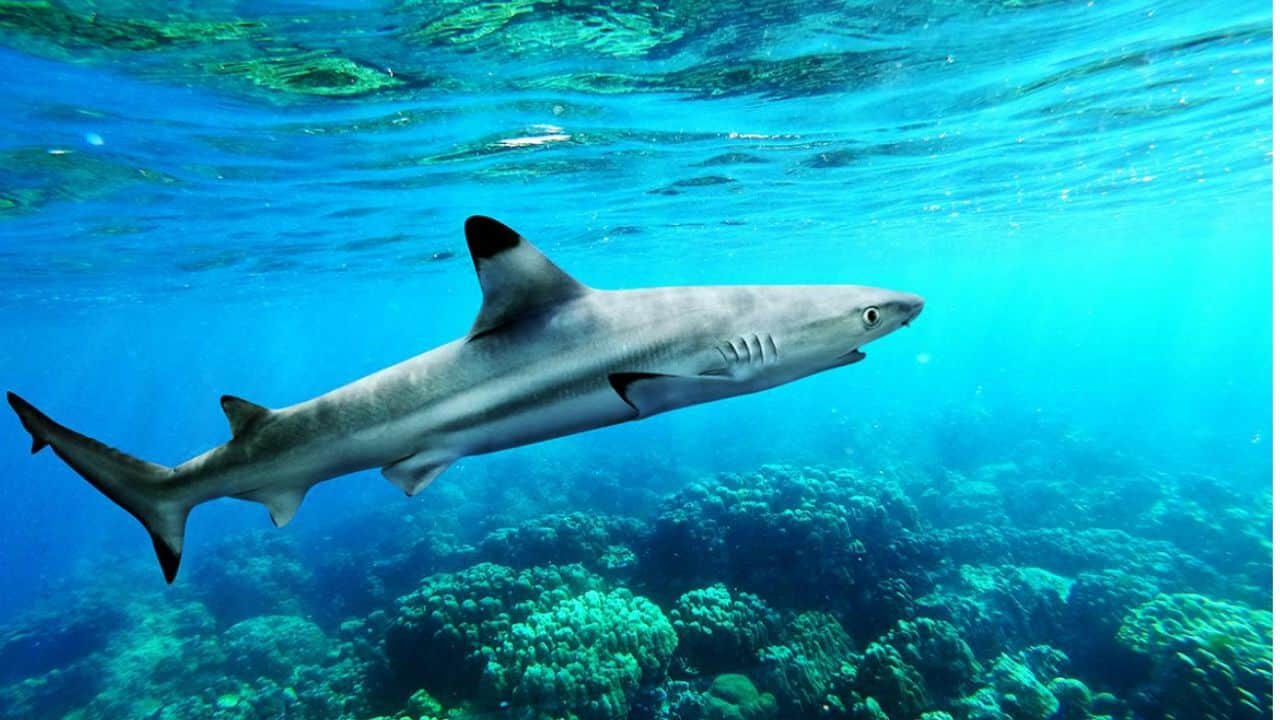
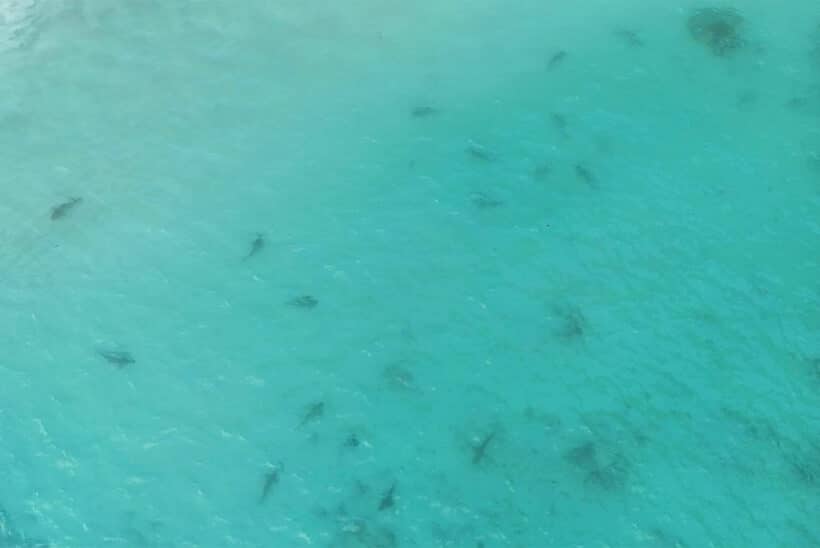
Tourists visiting Thailand’s iconic Maya Bay this month witnessed more than just stunning scenery, as researchers spotted an astonishing 158 blacktip reef sharks gliding through the shallow waters.
Once heavily impacted by tourism and made famous by The Beach, Maya Bay is now thriving again, attracting attention for its remarkable marine life.
Thai marine scientists reported that this sighting marks the largest number of blacktip reef sharks ever recorded in a single observation at the bay, recorded between July 2 and 8.
The sighting took place during a routine survey conducted by the Marine National Park Research Centre Region 3 (Trang) as part of the ongoing Shark Watch Project, according to Bangkok Post.
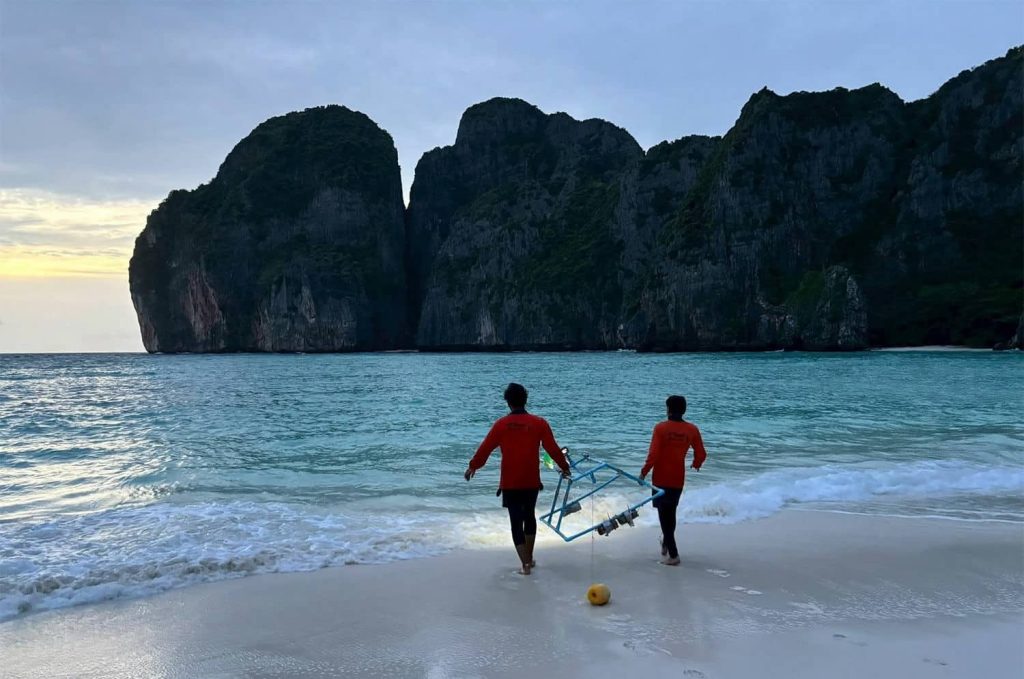
On the morning of July 3, researchers deployed aerial drones and underwater cameras, known as BRUV units (baited remote underwater video), to monitor the graceful predators moving through Maya Bay’s clear waters.
“This large aggregation is a strong indicator that the ecosystem is healthy,” said one researcher. “The sharks are exhibiting natural behaviors and hunting in groups, which is an ideal outcome for conservation efforts.”
Once a symbol of overtourism, Maya Bay was closed in 2018 after being heavily damaged by crowds of selfie-seeking visitors following the 2000 Leonardo DiCaprio film. A major restoration initiative was launched, and today, tourist numbers are strictly regulated with controlled boat access.
And it seems the sharks are thriving under these new conditions.
As apex predators, blacktip reef sharks play a crucial role in maintaining the balance of coral reef ecosystems. They are generally not dangerous to humans and rarely attack unless provoked, though swimmers may be startled by their distinctive fins slicing through the water.
Blacktip reef sharks (Carcharhinus melanopterus) are typically found in shallow tropical waters across the Indo-Pacific. Easily recognised by the black tips on their fins, they can reach up to 1.8 metres in length and are known for their graceful swimming and curious behavior.
With sightings like this, Maya Bay’s recovery is proving less like a fish tale and more like a conservation success story with real bite.